Uncategorized
Passing the baton
Published: Janvier 29 2026
The end of 2025 saw changes in the LIFE team!
Read more
To preserve the three existing sub-populations of Crau Plain Grasshopper, the grazing management of coussouls will be adapted in the long term to these populations and on the reintroduction sites, accompanied by habitat management actions. This is one of the four main objectives of the LIFE SOS Crau Grasshopper project.
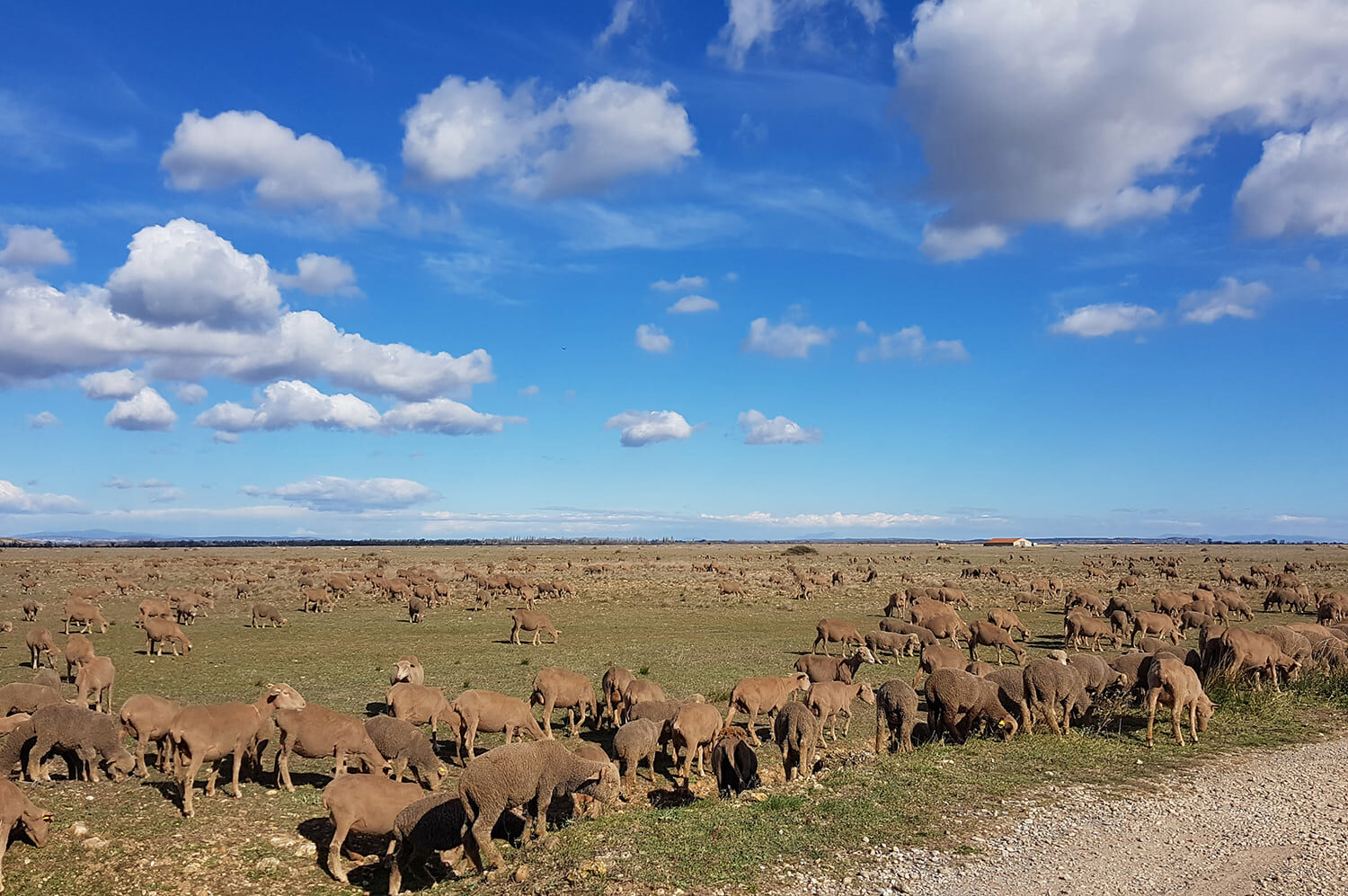
Moutons pâturant la Plaine de la Crau © Hubert Dupiczak - CEN PACA
The Bouches-du-Rhône Chamber of Agriculture and the Conservatoire d’espaces naturels de Provence-Alpes-Côte d’Azur will coordinate the following five actions:
Vegetation studies will be carried out on the sites of the three sub-populations and on the potential reintroduction sites in order to better understand the habitat requirements of the Crau Plain Grasshopper.
Remote sensing specialists will analyse habitat parameters between the 1980s and 2020. Grazing history, population trends of insectivorous species and data on P. rhodanica will be included.
The evolution of breeding practices, current grazing periods, the size of sheep flocks and grazing pressure will be analysed on five or six sites, based on existing data from the Bouches-du-Rhône Chamber of Agriculture, field work and interviews with local stakeholders. Management actions will be defined.
Implementation of the measures defined in the grazing plans (above) with local stakeholders. Example: zoning and adaptation of grazing periods, improvement of guarding and the presence of shepherds, improvement of working conditions including shepherds’ accommodation ; extension of grazing areas by reopening overgrown areas ; adaptation of management on the reintroduction sites (e. g. mosaic grazing).
Throughout the project, the Bouches-du-Rhône Chamber of Agriculture will monitor the impact of grazing and vegetation. This monitoring will make it possible to assess the impact of management on the remaining sub-populations and the reintroduction sites, and to adapt grazing management if necessary.
Grazing and transhumant pastoralism are key factors in the management of the coussouls; a socio-economic and environmental impact assessment will evaluate the results of the project taking into account ecosystem services.